During the last Australian election we ran an ambitious project that tracked campaign spending and political announcements by monitoring the Facebook pages of every major party politician and candidate.
The project, dubbed the “pork-o-meter” (after the term pork-barreling), was hugely successful in being able to identify distinct patterns of spending based on vote margin, or incumbent party, with marginal electorates receiving billions of dollars more in campaign promises than other electorates.
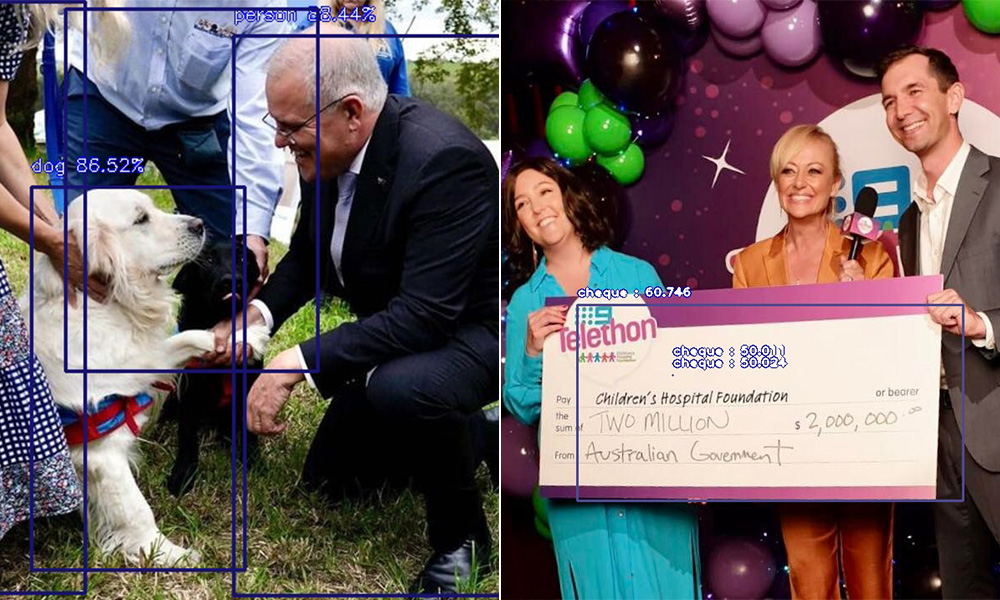
All up, we processed 34,061 Facebook posts, 2,452 media releases, and published eight stories (eg here, here and here) in addition to an interactive feature. We also used the same Facebook data to analyse photos posted during the campaign to break down the most common types of photo ops for each party, and how things have changed since the 2016 election.
We were able to discover more than 1,600 election promises, amounting to tens of billions of dollars in potential spending. Our textual analysis later found almost 200 (112 in marginal seats) of the Coalition’s promises were explicitly conditional on their winning the election. This means much of the targeted-largesse may never have been widely known without our project.
Teasing out a few hundred election promises from millions and millions of words is like finding a needle in a haystack, and would have been otherwise impossible for our small team in such a short time frame without making use of machine learning.
Because machine learning is still something of a rarity on the reporting side of journalism (as far as I know this project is a first of its kind for the Australian media, with other ML uses mostly concentrated on content management systems and publishing), we thought it would be worthwhile to write a more in-depth article on the methods we used, and how we’d do things differently if we had the chance.
Read the rest of the blog by myself and my colleague Josh on The Guardian.
 Nick Evershed